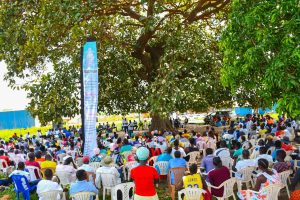
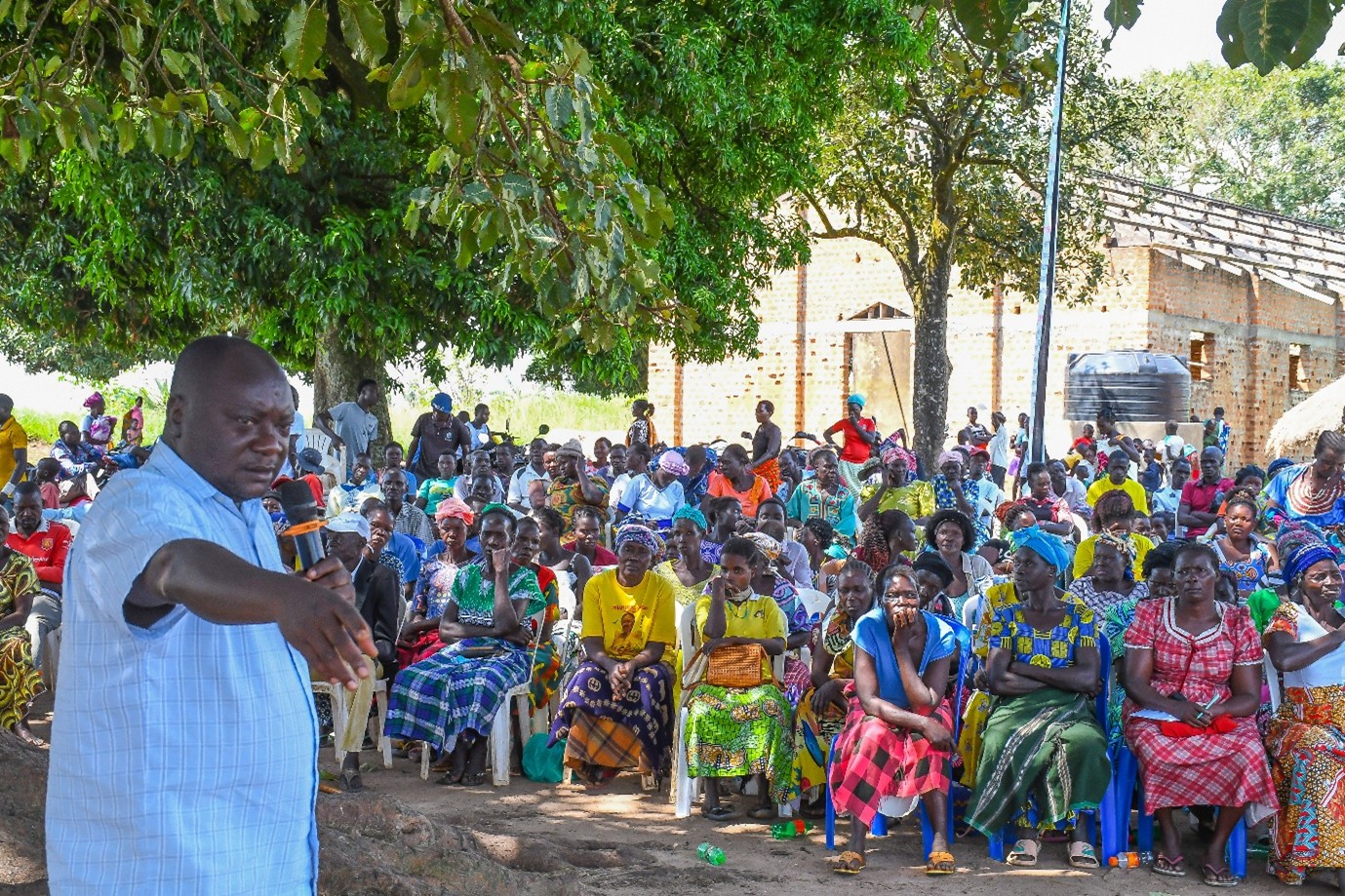
Community members who attended the legal clinic.
According to Ochan Debob, the Senior Assistant Chief Administrative Officer of Anaka sub-county, a total population of 14,891 citizens in the areas of Pabali (3,696), Todora (4,827), and Ywaya (6368) Communities living near protected areas frequently experience challenges arising from interactions with wildlife.
Animals such as elephants, wild pigs and buffaloes can stray into human settlements and destroy crops and other property, while in some cases encounters with wildlife result in injuries or loss of human life.
A community member who attended the engagement expressed her frustration with the compensation processes administered by Uganda Wildlife Authority saying it is overly bureaucratic involving so many layers of assessments and approvals. She added that they do not receive compensation even after reporting the losses since the criteria used and how victims are selected for compensation are unclear hence leading to distrust and dissatisfaction.
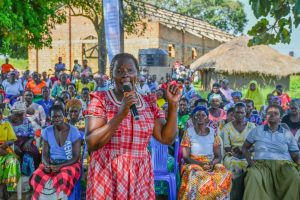
A community member expressing her grievances.
While responding to the grievances, Amere Sebbi, UWA Community Conservation Ranger said UWA still provides compensation of up to Shs20 million to families in cases where a human death is caused by a wild animal outside the protected area with 2.5million shillings given in cash as burial expense. This financial aid aims to alleviate the burden faced by the families and demonstrates the UWA’s commitment to preserving wildlife heritage.
He, however, said people like using shortcuts to get compensation without following proper documentation procedures and they end up not getting compensated. He urged the community to follow procedures. He also reassures the community of government support in erecting electric fences to keep them safe from attacks.
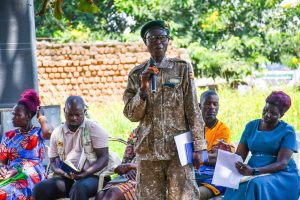
Amere Sebbi, UWA Community Conservation Ranger
Mr. Paul Julius Layoo, a lecturer at the Faculty of Law says communities affected by such incidents often have limited knowledge of their legal rights and how to pursue claims for compensation. The outreach, therefore, sought to bridge this knowledge gap by providing practical legal information to affected communities.
A key focus of the engagement was to sensitise communities on their rights and duties when they suffer losses because of human-wildlife conflict. Participants were expected to gain a better understanding of applicable laws, reporting procedures and the circumstances under which compensation or other legal remedies may be pursued.
The engagement brought together community members and other stakeholders, including local leaders, cultural leaders, security officials, UWA officials and district technical personnel. Their participation was intended to promote a coordinated understanding of the causes of human-wildlife conflict and the responsibilities of different stakeholders in addressing it.
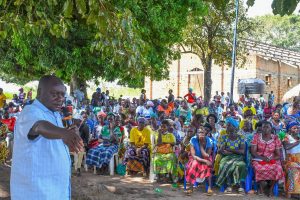
Mr. Paul Julius Layoo, a lecturer at Gulu University Faculty of Law.
The engagement also highlighted the role of the Uganda Wildlife Authority (UWA) in protecting and managing Uganda’s wildlife and protected areas, promoting sustainable tourism and addressing human-wildlife conflict.
The initiative is part of Gulu University’s broader mandate of teaching, research and community outreach. By taking legal knowledge beyond the university setting and directly to communities, the Faculty of Law is contributing to efforts to make legal information more accessible to people affected by social and economic challenges.
The initiative further demonstrates the University’s commitment to using its academic expertise to address challenges affecting communities in Northern Uganda and to promote access to justice and informed engagement between communities and relevant authorities





Leave a Reply