
Gulu University Driving Inclusive Transformation Through Agri-Food Innovation
In response to challenges of climate change, displacement, and economic hardship in northern Uganda, a team of partners from Belgium under the Institutional University Cooperation (IUC) visited, Gulu University, to participate in joint formulation of the project full proposal. This initiative is leading to a powerful transformation, rooted in research, community engagement, and innovation. The team will be working on a timely schedule from the 12th to 17th April 2026.
A group photo of the visiting delegates with staff at Gulu university.
Through the Institutional University Cooperation (IUC) project, Gulu University has positioned itself as a catalyst for change, working to strengthen its internal capacity while addressing some of the most pressing issues affecting refugee-host communities. The initiative, coordinated locally by Duncan Ongeng and supported by an international partnership led by Professor Dr. Xavier Gellynck from Ghent University, reflects a shared commitment to sustainable development and inclusive growth.
A photo of Professor Dr. Xavier Gellynck
At its core, the project seeks to reshape agri-food systems to improve livelihoods. For many communities in Northern Uganda, food insecurity remains a daily struggle, worsened by unpredictable climate patterns. Under the leadership of Eduardo de la Peña and Alfred Obia, the university is championing climate-smart agriculture, introducing innovative farming techniques that not only boost productivity but also build resilience among farmers.
But the journey from farm to table is just as critical as production itself. Recognizing this, another arm of the project focuses on post-harvest management and value addition. Led by Christopher Matthys and Nulu Nansikombi, this effort is equipping communities with the knowledge and tools to reduce food waste, enhance nutrition, and create marketable products. For many families, this means not only having enough to eat but also generating income from what they produce.
Beyond agriculture, the project acknowledges the social fabric that binds communities together. In areas where tensions between refugees and host populations can disrupt progress, Gulu University is stepping in with research-driven conflict resolution strategies. Spearheaded by Ilse Derluyn and Saidat Nakitto, this initiative is fostering dialogue and promoting peaceful coexistence, an essential ingredient for sustainable development.
A photo of the funder’s representative.
Youth unemployment, another pressing challenge, is being tackled through business incubation and entrepreneurship programs. With guidance from Liesbet Vranken and Irine Akite, young people are being empowered to turn ideas into viable agri-food enterprises. This not only creates jobs but also injects new energy into local economies.
Meanwhile, the university is strengthening its own systems to better serve the community. Through institutional support led by Christel Meert and Professor David Davy Okello Owiny, Gulu University is enhancing its research, teaching, and policy frameworks, ensuring that knowledge generated within its walls translates into real-world impact.
Environmental sustainability also remains a priority. In refugee settlements where survival often leads to environmental degradation, efforts led by Tine Compernolle and Geoffrey Maxwell Malinga are promoting responsible natural resource management. By introducing sustainable alternatives, the project is helping to protect vital ecosystems while supporting livelihoods.
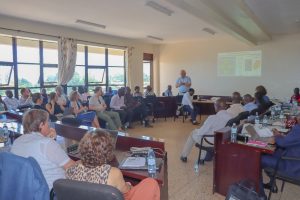
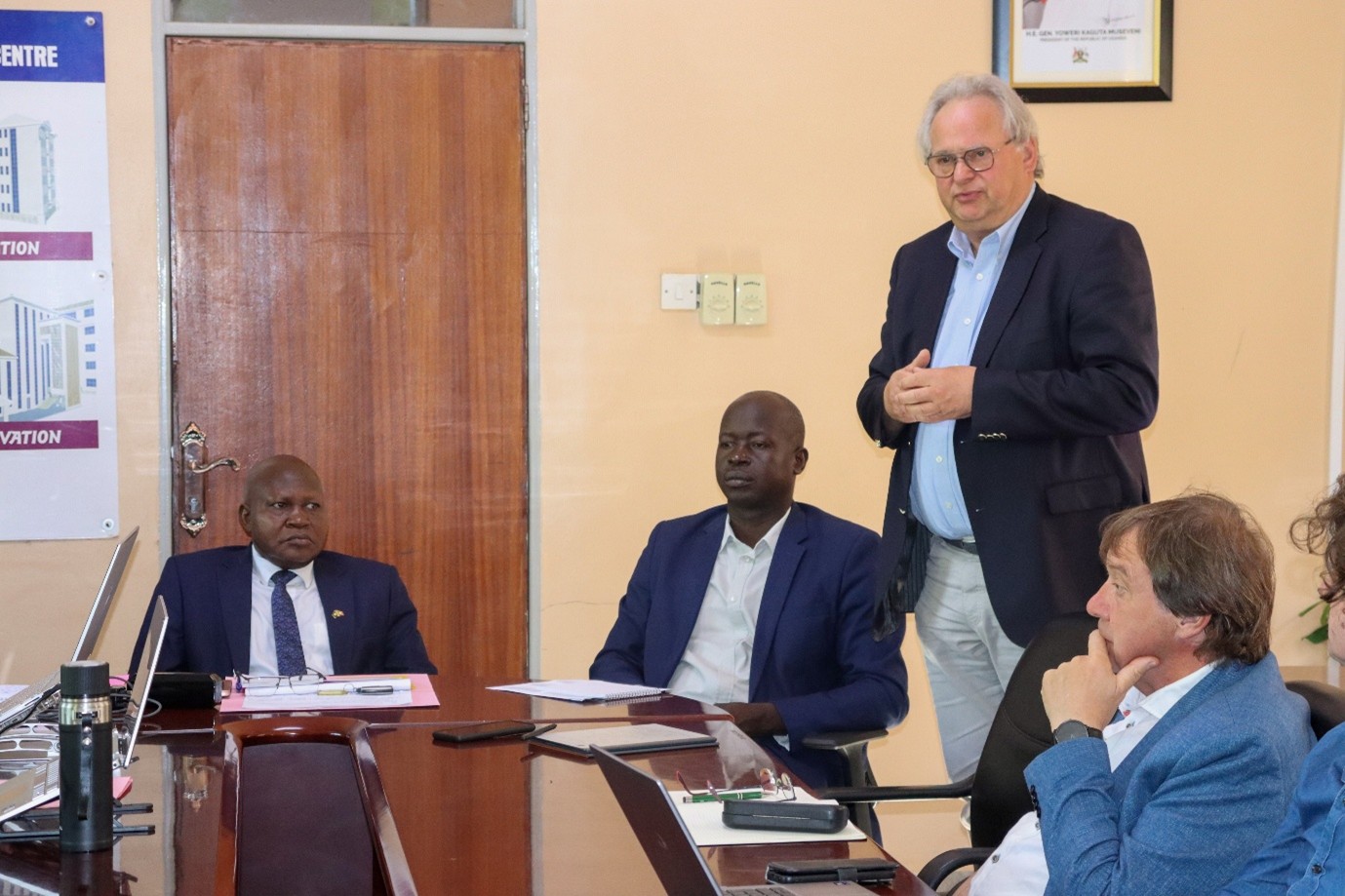
A group photo of the team during discussions.
Together, these interconnected efforts paint a picture of a university deeply embedded in its community, one that listens, innovates, and acts. The IUC project is more than an academic exercise; it is a living, evolving partnership aimed at transforming lives.
As Northern Uganda continues to navigate complex challenges, Gulu University stands as a beacon of hope, demonstrating that with collaboration, research, and a people-centred approach, sustainable change is not just possible, but within reach




Leave a Reply