
Universities must move beyond conducting research merely for promotion
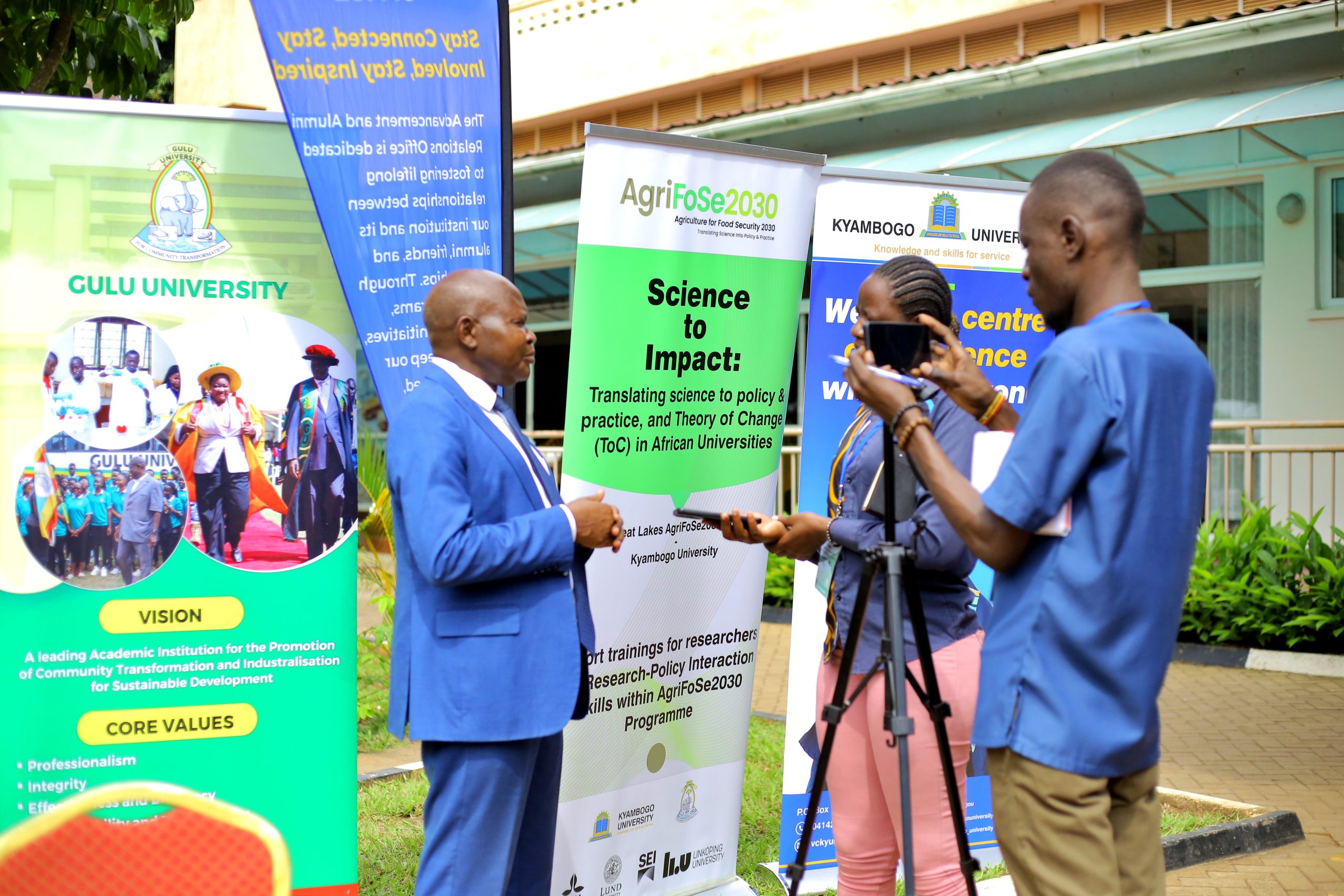
Academic researchers have been urged to conduct research to impact societies beyond just their academic promotions ;these remarks were made by the Gulu University Deputy Vice Chancellor, Professor David Okello Owiny , while opening the three day AgriFoSe training for researchers that started on Tuesday ,17th,February ,2026 and ending on Thursday ,19th 2026. The training themed translating science into policy and practice training is aimed at equipping researchers with skills in policy interaction within AgriFoSe 2030 programme. The training brought together Scholars, graduate students, and researchers gathering in Gulu from across Uganda and beyond. Representatives came from Gulu and Kyambogo, joined by participants from Ethiopia, Tanzania, Rwanda . The environment was one of shared purpose, a collective desire to strengthen the bridge between research, policy, and community practice.
During his speech the DVC argued that universities must move beyond conducting research merely for promotion and instead focus on research that informs policy, drives innovation, and supports industry.
Additionally, he reflected on the core functions of universities which include teaching and learning, research and innovation, and community engagement. “To what extent have we been working with the community?” he asked. “That determines the art in science.”
Explaining that for any policy to be approved, empirical data is essential and such data can only be generated through rigorous research. The process must be intentional: identify the problem, conduct research, formulate policy, and translate it into practice.
A key theme throughout the training was mindset change. Participants explored the importance of identifying research information gaps and embracing action research, research designed not just to study problems but to solve them.
Professor Bosco Bua, Director of Research and Graduate Training at Kyambogo University, addressed a critical concern on the missing gaps in research. He emphasized that too often, research remains confined to academic journals instead of transforming communities. The solution, he noted, lies in practicing community-based research, research that listens, engages, and responds directly to societal needs.
He highlighted the importance of cross-cutting collaboration among graduate students, encouraging interdisciplinary approaches to solve complex challenges. Researchers, he stressed, must play an active role in policy formulation. “Evidence-based research is not optional,” he said. “It is the backbone of credible policy and sustainable practice.” The ultimate goal is institutionalizing research outcomes into real-world application.
He explained that for any policy to be approved, empirical data is essential and such data can only be generated through rigorous research. The process must be intentional: identify the problem, conduct research, formulate policy, and translate it into practice.
Universities, he argued, must move beyond conducting research merely for promotion and instead focus on research that informs policy, drives innovation, and supports industry.
The goals of the training and outcomes were clear. Participants should gain the ability to influence practice through evidence. The training should strengthen their capacity to translate findings into actionable recommendations. Most importantly, they will develop the skills to write convincing policy briefs- documents capable of shaping decisions at institutional and national levels.





Leave a Reply